Choosing the right long-term care option for a loved one is one of the most significant and often emotional decisions a family can face. The landscape of senior care offers several excellent paths, but two primary choices frequently emerge: professional home care vs assisted living. For families exploring these options, understanding the nuances—from cost and …

Choosing the right long-term care option for a loved one is one of the most significant and often emotional decisions a family can face. The landscape of senior care offers several excellent paths, but two primary choices frequently emerge: professional home care vs assisted living.
For families exploring these options, understanding the nuances—from cost and services to independence and social environment—is crucial. This comparison aims to clarify the key distinctions to help you make an informed choice that best suits your loved one’s unique needs and lifestyle.
Understanding the Core Difference
The fundamental difference between home care and assisted living lies in location and structure.
- Home Care (In-Home Care): Services are delivered directly to the senior’s own home, providing personalized support while allowing them to remain in a familiar environment. This is often an ideal solution for those who cherish their independence and are generally stable but need help with daily tasks or medical management.
- Assisted Living: This is a residential housing option that provides supervision or assistance with activities of daily living (ADLs) in a community setting. Residents move into a private or semi-private apartment within a facility that offers communal dining, social activities, and 24/7 staffing.
A Comprehensive Comparison: Home Care vs. Assisted Living
1. Services and Scope of Care
| Feature | Home Care (In-Home Care) | Assisted Living |
|---|---|---|
| Location | Client’s own home (house, apartment, condo) | Residential facility with private/semi-private units |
| ADL Assistance | Highly flexible; customized to the client’s schedule (e.g., bathing, dressing, toileting) | Provided by facility staff; scheduled and often standardized |
| Medical Care | Can include skilled nursing (medication management, wound care) through a home health agency | Generally limited to medication reminders and coordination with external providers. |
| Meals | Meal preparation and feeding assistance provided by the caregiver | Communal dining, with scheduled meals provided by the facility. |
| Housekeeping | Light housekeeping, laundry, and errands are standard services | Housekeeping and maintenance are handled by the facility staff. |
| Supervision | Scheduled visits (hourly, daily, or live-in) | 24/7 on-site staff and emergency call system. |
Home care offers unparalleled flexibility, allowing services to scale up or down as needs change, from a few hours a week to 24-hour live-in care. Assisted living provides a structured, predictable environment with round-the-clock availability of assistance.
2. Independence and Comfort
For many seniors, maintaining independence is paramount.
Home Care excels in this area. Staying at home allows the individual to control their schedule, environment, diet, and visitors completely. The familiar surroundings contribute to emotional comfort and can be particularly beneficial for those with memory issues.
Assisted Living requires a significant adjustment. While residents have a private living space, they must adhere to the facility’s schedule for meals, activities, and sometimes, care. The trade-off is the immediate accessibility of staff and the elimination of home maintenance concerns.
3. The Social Environment
The social aspect is a key factor and a significant difference between home care and assisted living.
- Home Care: Social interaction primarily comes from family, friends, and the caregiver. While the environment is familiar, it can lead to isolation if the senior is not mobile or actively involved in outside activities. Many home care agencies, like Akin Care, offer companionship as a core service to mitigate loneliness.
- Assisted Living: These communities are designed to foster social engagement. They offer robust activity calendars, communal spaces, organized outings, and daily opportunities to interact with peers, which can greatly improve mental health and quality of life for outgoing individuals.
4. Cost Considerations: Assisted Living vs. In-Home Care Cost
The financial aspect is often the most complex. When comparing assisted living vs in home care cost, it’s essential to look beyond the sticker price.
Assisted Living Cost: Typically priced as a monthly fee that covers housing, utilities, meals, activities, and a baseline level of care. Costs increase with the level of care required (e.g., specialized dementia care).
Home Care Cost: This is usually an hourly rate. The total monthly cost is directly proportional to the number of hours of care received. Families must also continue to pay for housing, utilities, food, and home maintenance.
| Scenario | Home Care Cost Implication | Assisted Living Cost Implication |
|---|---|---|
| Minimal Needs (e.g., 10-15 hours/week) | Often significantly less expensive | Monthly fee can be higher than needed care hours |
| Extensive Needs (e.g., 24/7 care) | Can become very expensive, potentially exceeding assisted living costs | Predictable flat monthly rate, regardless of daily care spikes |
For high-level, round-the-clock care, assisted living might offer better cost predictability, though specialized home care solutions can sometimes offer a more tailored and efficient use of funds.
Home Care vs. Nursing Home: When Needs Escalate
It is important to distinguish both home care and assisted living from a home care vs nursing home decision.
A nursing home (or skilled nursing facility) is for individuals requiring 24-hour medical care, rehabilitation, and supervision by licensed nurses and doctors. Residents often have severe chronic medical conditions, complex wounds, or require short-term post-hospital recovery.
- Assisted Living provides custodial care (help with ADLs); it is not a medical facility.
- Home Care can bridge the gap, offering both custodial care and specialized skilled nursing services in the home, often allowing a senior to recover from an injury or manage a complex condition without moving to a nursing home.
The decision to move from assisted living to a nursing home typically occurs when a resident’s medical needs exceed the capabilities of the assisted living staff, necessitating continuous, high-level medical oversight.
Making the Best Choice for Your Family
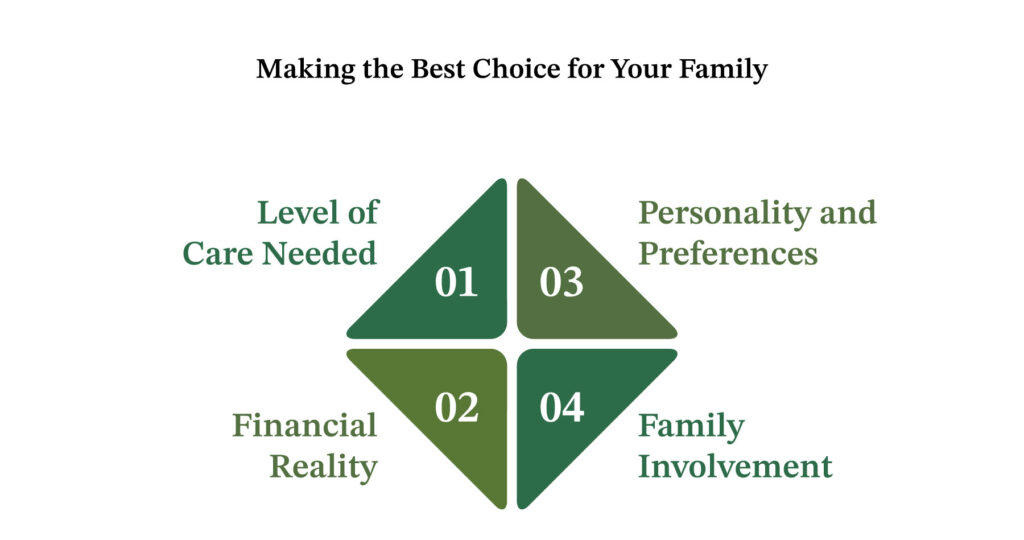
The ultimate decision between home care and assisted living hinges on a few critical factors:
- Level of Care Needed: Is the primary need medical (favoring home care with skilled nursing or a nursing home), or is it assistance with daily living and a safe environment (favoring either option)?
- Financial Reality: Compare the total projected monthly costs for the necessary level of service in both settings.
- Personality and Preferences: Does your loved one thrive in a social setting (assisted living), or do they cherish their privacy and familiar routine above all else (home care)?
- Family Involvement: Home care often requires more coordination from family members, while assisted living centralizes services.
At Akin Care, we understand this journey is complex. Whether you choose the customized support of professional in-home care or the community environment of assisted living, the goal remains the same: ensuring the dignity, safety, and well-being of your loved one. By thoroughly assessing these comparisons, you can confidently select the path that provides the highest quality of life.
FAQs
Q1: What is the main difference between Home Care and Assisted Living?
A: The fundamental difference is location and structure. Home Care services are delivered directly in the senior’s familiar home, providing flexible, personalized support. Assisted Living is a residential community setting where the senior moves into a private unit and receives standardized care, meals, and social activities on-site.
Q2: Which option is generally more cost-effective?
A: It depends entirely on the level of care needed. For minimal needs (e.g., a few hours per week), Home Care is usually significantly less expensive. For extensive, 24/7 care, Assisted Living might offer better cost predictability with a flat monthly rate, whereas 24/7 Home Care can become very expensive due to the hourly rates.
Q3: Does Assisted Living provide medical care?
A: Assisted Living facilities primarily provide custodial care—assistance with daily living activities (ADLs) like bathing and dressing. They are generally not medical facilities. Medical care is typically limited to medication reminders and coordinating with external providers. Home Care, however, can include nursing services (like wound care or complex medication management) if provided by a certified home health agency.
Q4: If my loved one values their independence and routine, which option is better?
A: Home Care is typically better for seniors who prioritize independence and familiar surroundings. It allows them to maintain complete control over their schedule, diet, and environment. Assisted Living, while offering private space, requires adherence to the facility’s schedule for meals and activities.
Q5: When should a family consider a Nursing Home instead of Home Care or Assisted Living?
A: A Nursing Home (Skilled Nursing Facility) is required when an individual needs 24-hour medical care, constant supervision by licensed doctors and nurses, or complex medical rehabilitation (e.g., severe chronic conditions, complex wound care, or intensive post-hospital recovery). Both Home Care and Assisted Living are generally geared towards non-acute, custodial, or supportive care.